PLA 3D Filament Guide for 3D Printers
PLA 3D Filament is one of the most common 3D filaments on the market and we recommend anyone who wants to make simpler prototypes and design objects to start printing in PLA plastic on your 3D Printer.
There are two standards on the market, PLA filament 1.75 mm and 2.75mm, of which 1.75mm is the most common.
What is PLA filament made of?
- PLA, Polylactic acid is an environmentally friendly plastic made from corn and other natural raw materials. This makes PLA one of the most environmentally friendly filaments we can use.
What material properties does PLA have?
- PLA is an affordable 3D filament that costs from about 199 SEK including VAT.
- Polylactic filament can withstand temperatures of up to about 60C.
Unfortunately, this limits the scope of use for PLA. For example, if you make a 3D print that you then forget in the car on a hot summer day, there is a high risk that your 3D model will crack or deform from the heat. - Degrades by UV light, the material is not suitable for outdoor use.
- Models 3D printed in PLA plastic can be broken down in nature, it takes about 10 years.
- PLA plastic properties - It is a stiff, but brittle material. It is well suited for use in, for example, consoles, design objects, prototypes, etc.
How do I 3D print in PLA 3D filament? - Checklist
| 1/ Clean the build platform | |
| 2/ Apply a bonding agent if necessary |  |
| 3/ Make sure your build platform is calibrated at the correct level |  |
| 4/ Heat the 3D printer nozzle between 190-220 degrees. For Azurefilm PLA we recommend about 205C at 0.2mm layer and a speed of 60mm/s | 
|
| 5/ Heat your build platform to - First layer approx. 60C - For other layers, about 50C is usually sufficient. |
|
| 6/ Part Cooling fan - Always on with PLA filament! If you have an enclosed build chamber, make sure to open a door, PLA prints best at room temperature and is sensitive to heat |  |
| 7/ For finishing, you can use wet sandpaper, spray filler or various knives/files to remove any defects. |  |
What different types of PLA filament are there?
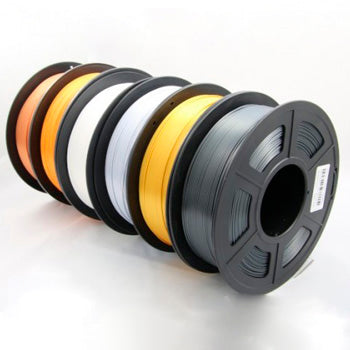
- SILK PLA filament , gives a glossy, colorful and aesthetically pleasing surface! See our awesome SILK Filament here
- Matte PLA filament , Provides an aesthetic matte surface that hides layer liner, examples of these are Azurefilm pastel PLA, Fiberlogy Pastel PLA or Fiberlogy R-PLA
- Wood PLA filament , We have stylish wood filaments that mimic different types of wood such as spruce, pine, cork etc. The filament contains wood chips and also smells of wood when you print with it. NOTE: Use a stainless steel nozzle or hardened nozzle. The wood chips will wear out regular brass nozzles.
- HT-PLA filament , A modified "High Temperature" and extra strong PLA 3D printer filament that is usually 3D printed at higher temperatures than the standard material. It is just as easy to print with as regular PLA but can withstand higher temperatures and is stronger. We stock Azurefilm PLA Strongman
- PLA Carbon Fiber Filament – Carbon fiber makes your model stiffer, lighter, and slightly more heat resistant. Carbon fiber also gives a matte finish and hides layer lines!
How do I best store PLA filament?
- PLA plastic is not hygroscopic (absorbs moisture from the environment)
- It is possible to store PLA at normal room temperature for a long time without the filament deteriorating. We have stored open filament rolls with PLA for over 5 years. What can be noticed on older filament is that the filament's 1.75mm wire becomes brittle and breaks more easily. If the filament wire breaks, it can be difficult to remove filament residue from the 3D Printer's extruder and hotend.
- The best way to store all types of 3D filament is dust-free and preferably wrapped in a bag with a moisture absorber. When a filament absorbs moisture and dust, there is a risk that your extruder and hotend will become blocked by dirt, also known as “clogging”.
- We have ESUN evaccum bags that are perfect for storing most filaments.


Order 3d model made of plastic
We do contract manufacturing in plastic with a wide range of materials, can also be combined with metals, sheet materials, etc.
We have several 3D techniques
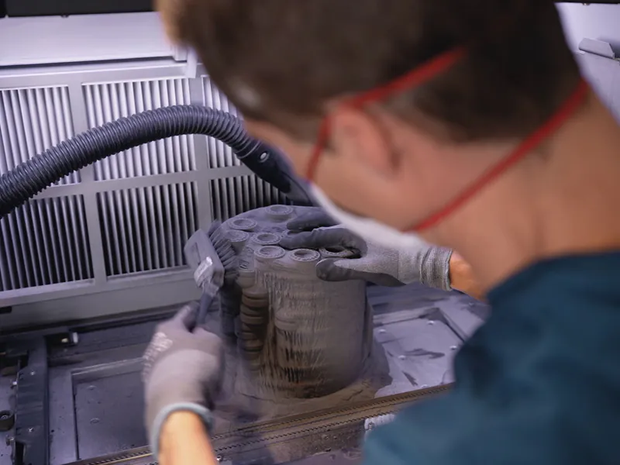
- Manufacturing with Selective laser sintering
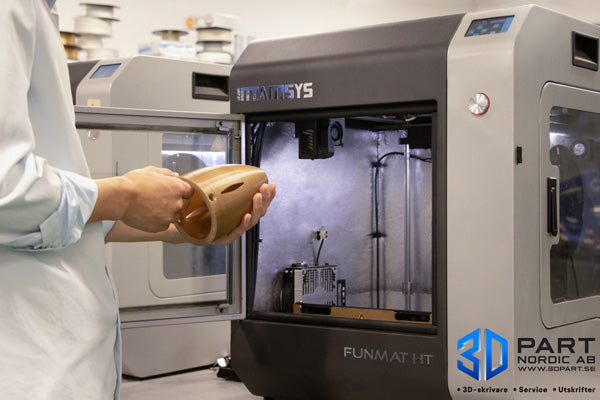
- Manufacturing with Fused deposit molding
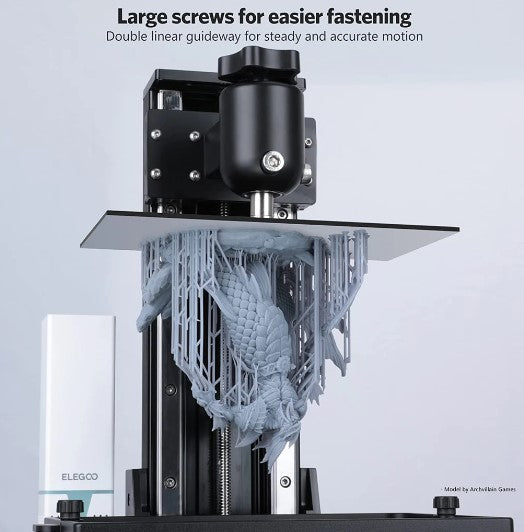
- Manufacturing with Stereolithography